Showing posts with label car care. Show all posts

Wednesday, September 23, 2015

Bad Habits

When it comes to your car’s “health”, you may be have some bad habits that seem perfectly safe (and smart), but can actually hurt your car in the long run.

Most vehicles are designed to have long lifespans when properly taken care of. But sometimes you may not even be aware that what you’re doing may actually be hurting your car, reducing its lifespan and decreasing its value.

Carrying too much weight.


Just like carrying extra weight around the midsection is bad for your health, hauling too much weight in your car is bad for its suspension, braking and exhaust systems. Having too much weight in your car can put unnecessary stress on some of its critical systems, leading to premature wear. Too much weight makes your engine work harder than it should.

What you can do: Take a look at what’s in your car. Can you remove some of it? Does that cargo carrier really need to stay on your car on a day-to-day basis, or can it be removed until needed? If there are items that can be removed to decrease the weight (and stress) on your car, do it now.

Ignoring a tiny chip in the windshield.


You notice a tiny, speck-like chip in the corner of your windshield. It’s not in your line of sight, so it’s no big deal to ignore it. Right? Wrong. That tiny speck can easily turn into a giant crack – and the need for a full windshield replacement – if it’s ignored. Not to mention the cost of repairing a small windshield chip is usually much lower than the cost to replace an entire windshield.

What you can do: Get the chip repaired immediately.

Never replacing your tires.


Keeping an eye on your tires is critical to the health of your car. But don’t just look at your tire tread – also pay attention to your car’s tire pressure. The National Highway Traffic Safety Administration (NHTSA) found that underinflated tires are up to 25 percent more likely to overheat, fail and cause an accident. Tire tread is also important, since not having enough tread can cause skidding, shaky steering and vibrations. Even if your tires look fine to the naked eye, it doesn’t mean they are.

What you can do:
Check your tire pressure and tread depth every so often. You can use a penny to check depth by inserting the ‘heads’ side down into the tread. If the entire head is visible, you don’t have enough tread. A good rule of thumb is keeping your tires at 2/32” tread depth minimum.

Keeping your car in a heated garage.


You’d think that keeping your vehicle toasty warm during the cold winters is a good thing – and it is for your car’s engine. But not so much for your vehicle’s exterior. When you park your snow or ice-covered car in a warm garage, the heat melts the fluids, which mix with salt from the roads. This combination then sits in puddles on or near your car, and this increases risk of oxidation (rusting).

What you can do: Instead of keeping your car in a heated garage, opt for a non-temperature controlled garage or covered space. Your vehicle will still be protected from harsh winter winds and snow, but it won’t succumb to melting salt, ice and rust.

Not doing research before an auto repair.


Your car’s maintenance is so much like the maintenance of your own health – it’s always smart to be informed. If you have no idea what’s going on with your car, how do you know how serious the repair will be? You also won’t know how long the repair will take or how much the bill will be. Being proactive with your car’s “health” is the best way to take care of it.

What you can do: Do your own research about symptoms of problems before you visit an auto mechanic. This way you’re somewhat prepared for the diagnosis and repair plan, you’re not caught off guard and most importantly, you’re not taken advantage of. Studies have shown that some auto mechanics take advantage of ignorance by charging more than they would for a more educated customer.

Your car’s health is similar to your own – so much so that you might be committing a few bad habits that you think are fine. The first step is to become educated, and the next is to scratch those old bad habits by forming new, better ones. Your car’s lifespan will surely benefit from the changes.

Friday, September 18, 2015

Fall Car Care


Taking a few simple steps now can save you the headaches and cost of an emergency breakdown later. Whether you do it yourself or take your car to a professional service technician, here are four proactive steps to take this fall to make sure your car is ready for winter driving.
  1. Battery – Keep the battery connections clean, tight and corrosion-free. Cold weather is hard on batteries, so it’s wise to check the battery and charging system. Because batteries don’t always give warning signs before they fail, it is advisable to replace batteries that are more than three years old.
  2. Heater, Defrosters and Wiper Blades – Check that the heating, ventilating and air conditioning (HVAC) system are working properly as heating and cooling performance is critical for interior comfort and for safety reasons, such as defrosting. Fall is also a great time to check your air filters. Wiper blades that are torn, cracked or don’t properly clean your windshield should be replaced. As a general rule, wiper blades should be replaced every six months. When changing the blades, be sure to also check the fluid level in the windshield washer reservoir.
  3. Tires – Check the tires, including the tire pressure and tread depth. Uneven wear indicates a need for wheel alignment. Tires should also be checked for bulges and bald spots. If snow and ice are a problem in your area, consider special tires designed to grip slick roads. During winter, tire pressure should be checked weekly as tires lose pressure when temperatures drop.
  4. Brakes – Have the brake system checked, including brake linings, rotors and drums. Brakes are critical to vehicle safety and particularly important when driving on icy or snow-covered roads.

Getting your vehicle ready for winter while temperatures are still mild is a proactive approach to preventive maintenance that helps ensure safety, reliability and fewer unexpected repairs when severe winter weather strikes.

Friday, September 4, 2015

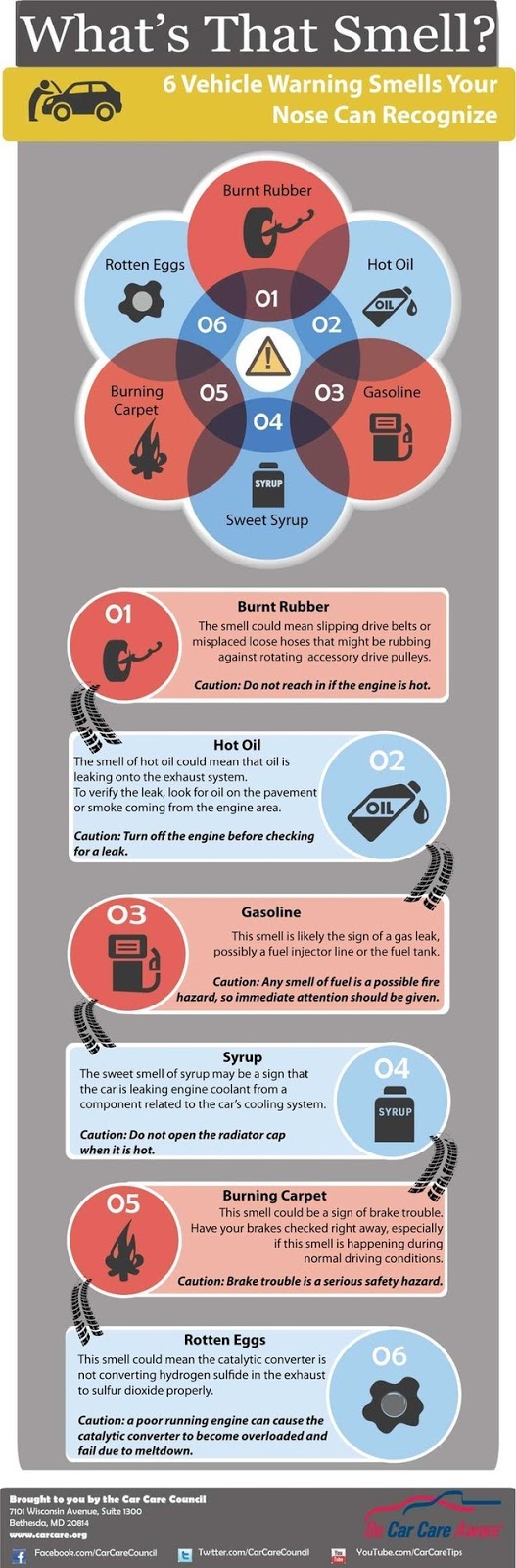
Does your car smell sweet?

It might be more than that soda you spilled. Check out this handy infographic to see what certain smells could mean for your car!


Friday, August 21, 2015

Tire Maintenance

Your tires contribute to vehicle performance. Tire maintenance can protect your investment by extending the life of your tires. Checking tire pressure, rotating your tires, balancing your tires, and choosing the right set of replacement tires based on safety and handling will all contribute to consistent performance.

Use the following tips to help you stay on top of tire maintenance:

  • Check tire pressure to ensure proper inflation. Under-inflation can lead to excess heat, uneven tire wear, and decreased braking and handling capabilities, which may cause structural failures like blowouts and tread separation. Properly inflated tires will maximize tread life, improve handling, and increase fuel efficiency and overall driver safety.
  • Follow proper tire rotation schedules. Recommended rotation patterns for your vehicle can be found in your owner’s manual. Routine tire rotations equalize and enhance front-to-rear and side-to-side tire wear. Remember: tire rotation will not prevent or circumvent wear issues caused by worn mechanical components.
  • Balance tires as necessary. Out-of-balance tires may be detected in bumps that become more noticeable at higher speeds. Balancing tires is necessary during initial installation and during a remount.
  • Install new tires in sets or pairs. The addition of one new tire to the rotation cycle can cause instability and create vehicle handling issues. When new tires are needed, two new tires should be installed on the rear of a vehicle, and the partially worn tires should be moved to the front of the vehicle.
  • When the time comes to store your tires for next season, consider a dark place away from direct sunlight with low humidity. Tires should be stored away from solvents, grease, oil, or any ozone-producing electrical equipment, which have deteriorating effects on tires.
  • Be mindful of abnormal tire wear or damage to your tires. Watch for signs of punctures, embedded objects, cracks, and bulge.
  • Always keep a spare tire, and make sure it’s properly inflated and ready for use. You never know when you’re going to need it.Take these tips into consideration when servicing your tires. The Rubber Manufacturer's Association (RMA) recommends taking five minutes each month to check your tires. Other mechanical issues may contribute to uneven tire wear, and need correction in order to maximize tire life and vehicle performance.

By taking proper care of your tires, you can remain safe during all types of travel, experience the benefits of better fuel economy, and extend tire life, which will positively impact the environment.